Direct mail gives your audience time with your message whilst digital channels give them quick ways to act on it. By building this connection marketers can create campaigns that move naturally between someone's home and their devices.
We're not suggesting that blending offline with online is a new phenomenon. But too often the connectivity between these two worlds is overlooked, with direct mail an important piece of the puzzle when considering how to bridge the gap.
By favouring a digital-only approach you might think you'll achieve attributable and immediate results. The reality is many campaigns end up burning ad spend on cold audiences.
According to the ANA, nearly $27bn of global media value is lost each year due to inefficiencies.
Thankfully, there's an evidence-based alternative that demonstrates the power of introducing direct mail to your marketing mix.
As we'll explore, a piece of direct mail can introduce an offer, prompt a website visit or start a conversation. And email, social media and online advertising can pick things up from there.
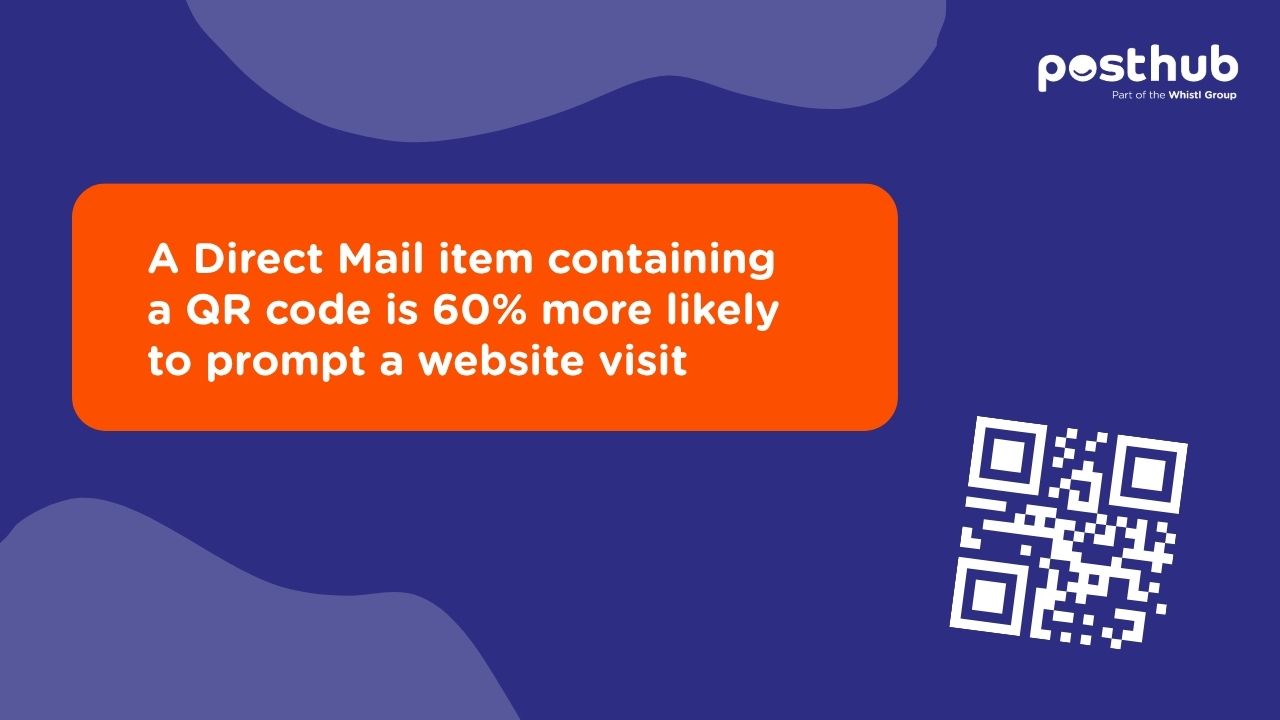
Data from JICMAIL (Joint Industry Currency for Mail) shows mail prompts website visits in 9.5% of cases. Also, direct mail containing a QR code is 60% more likely than average to prompt a website visit.
This makes mail a "Super Touchpoint" because it can attract attention, deepen customer relationships and prompt conversations in the home. It supports activity across acquisition, retention and recommendation too.
For marketers, the opportunity is fairly simple. Plan direct mail and digital together, give each channel a clear job, and make it easy for your audience to move between them.
What Makes the Direct Mail and Digital Combination So Effective?
Attention is one of direct mail's strengths.
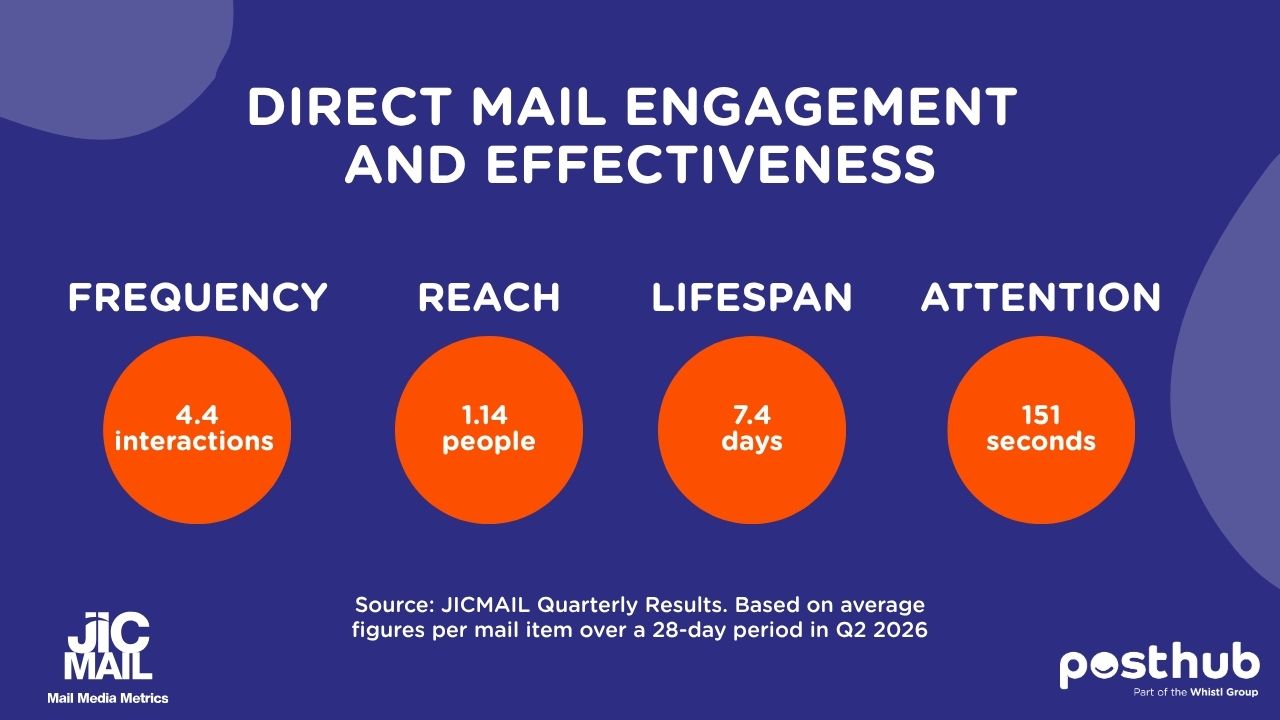
The average Direct Mail item receives 151 seconds of attention during a 28-day period. People also interact with it 4.41 times on average, so one delivery can result in several opportunities for someone to see and respond to your message.
Mail can stick around too. Direct Mail has an average lifespan of 7.4 days in the home.
That gives your campaign time to work.
Someone might read your mail when it arrives, leave it on the kitchen worktop, come back to it a few days later and scan the QR code. Or they might search for your brand after seeing the mail, then return through a paid search ad or email.
JICMAIL tracks those connections between mail and online behaviour. Its data shows people visiting websites, searching online, looking up account details and using QR codes after receiving mail.
That connectivity gives direct mail a useful place in a broader marketing plan.
The Building Blocks of a Multichannel Campaign
As outlined in The Value of Super Touchpoint Planning, "multi-channel planning is a key driver of effectiveness", with TV and Door Drops, and TV and Direct Mail some of the most effective pairings.
But let's start with the audience or person you want to reach and the action you want them to take.
Then give each channel a clear purpose
- Audience: Who should receive your direct mail, and what customer, prospect or geographic data can you use to reach them?
- Message: Give people one clear reason to pay attention and keep that message consistent across the campaign.
- Offer: Give people a clear reason to respond, whether that's requesting a quote, buying a product, registering for an event or finding out more.
- Digital destination: Send people somewhere relevant. Use a campaign landing page, product page, booking form or other destination that continues the message from the mail.
- Follow-up plan: Decide how you'll communicate with people who respond, visit your website or buy.
- Measurement: Decide which responses you'll track before the campaign starts.
Direct mail companies can help here. Look for postal partners (like Posthub and the wider Whistl Group) that can support the targeting and mailing activity whilst giving your wider marketing team the information needed to understand campaign response.
JICMAIL's Super Touchpoint research recommends planning paid, owned and earned activity together, with each contact connecting naturally with the next.
Connecting Direct Mail with Email Marketing
Direct mail and email can work particularly well together because they reach the same customer in different contexts.
For existing customers or known prospects, you can plan email activity around the arrival of your mail.
A straightforward sequence could look something like this:
- Introduce the offer through direct mail. Give the recipient a clear reason to take an interest and an easy way to respond.
- Follow up by email. Use recognisable creative, repeat the offer and take people to the same digital destination.
- Respond to behaviour. Tailor subsequent communications to actions such as visiting the page, making an enquiry or buying.
- Measure the combined response. Look at what people do across mail and digital channels so you get a fuller view of performance.
Timing is important. You don't need to hit someone with several messages at once. Follow direct mail best practice and give the mail time to arrive and let each follow-up have a reason to exist.
Turning Direct Mail Recipients into Website Visitors
Making the move from a piece of mail to your website should take seconds.
As mentioned, 9.5% of mail prompts a website visit, with QR codes the vehicle for getting people there.
However, the destination is just as important as the QR code.
If your mail promises a quote, take people straight to the quote page. If you're promoting an event, link to the registration page. If you've sent an offer, make sure the landing page carries the same offer.
Avoid making people hunt through your website to find what attracted their attention in the first place.
Campaign URLs and QR codes also make response easier to measure. You can use different destinations or tracking parameters for different audiences, offers or creative executions, giving you a clearer picture of what generated the visit.
How to Integrate Direct Mail with Social Media
There are many advantages to using direct marketing. One is the fact that mail can start conversations inside the home as well as online.
JICMAIL reports that 16% of mail triggers an in-home discussion. Its wider Super Touchpoint research also identifies discussion as a common action generated by Direct Mail, Door Drops, Business Mail and Partially Addressed Mail.
Social media gives those conversations somewhere else to continue.
You could use direct mail to take recipients to an event page, useful video, customer story or piece of social content. Be specific about what they'll find when they get there.
Useful tactics include:
- Link to specific social content. A QR code that takes someone to a useful post or event gives them a clearer reason to scan.
- Continue the conversation online. Share product information, customer examples, videos or event content connected to the mail you've sent.
- Give people something to respond to. Ask them to register, view something useful or take part in a relevant campaign conversation.
- Keep the campaign recognisable. Carry the same colours, imagery, offer and message through your mail and social creative.
- Keep measuring. Track the clicks, visits and responses that follow the mailing so you can learn which combinations work for your audience.
How Can Direct Mail Extend a Wider Marketing Campaign?
Direct mail and door drops can give a wider campaign more time to work. Because a piece of mail can stay in the home long after an ad has disappeared from view, people are given the opportunity to respond days or weeks later.
This makes timing important. Plan your mail alongside digital, social and other advertising activity, using the same campaign message, offer and recognisable creative. Each contact should give people another opportunity to respond.
Across the Whistl Group, we've worked with big brands on connected campaigns across several channels. For example, Majestic's Christmas campaign used TV, Out-of-Home, digital, social, customer direct mail and door drops as part of the same campaign.
The results showcased the vital role of mail within that mix. Door drop areas saw a 33% sales uplift, compared with 15% in control areas, with a 27% uplift still recorded two weeks after the campaign ended. Door drops also delivered the highest return on marketing investment across all channels, at 48.7:1.
Majestic's results show how targeted mail can keep generating response alongside, and beyond, the wider campaign period.
Plan Your Measurement and Attribution
Decide how you'll measure the campaign whilst you're planning it. A simple measurement checklist should factor in the following:
- Track QR scans, visits, enquiries, calls and purchases.
- Use separate tracking for different audiences or creative versions where it will give you useful information.
- Monitor response during and after the mailing period.
- Compare campaign landing-page activity with other traffic sources.
- Connect digital activity with enquiries and sales where your tracking allows.
- Record what you learn and use it when planning the next campaign.
Let's look at this on a practical level.
Imagine you're a retailer launching a fresh product line and you want to drive sales amongst existing customers, whilst also hoping to attract new ones.
You send a piece of direct mail promoting the offers and include a QR code and short campaign URL. Both go to a dedicated landing page where the recipient can browse and make a purchase.
These known contacts also receive an email as part of the same campaign. Meanwhile, Paid search and social advertising run during the mailing period, using the same offer and creative cues.
Someone receiving the mail now has several easy ways to respond.
Your team can measure deliveries, QR scans, campaign-page visits, and sales. You can then see which audiences and creative approaches deserve more of the budget next time.
Make Every Channel Part of the Same Journey
Direct mail can earn a lot of attention and engagement for your message whilst email, landing pages, social media and online advertising provide quick ways to respond.
We've covered the numbers to support that connection.
Direct Mail receives 151 seconds of attention across 28 days, lives in the home for 7.4 days and is interacted with 4.41 times on average. The channel is also proven to prompt website visits.
Plan those contacts together. Keep your offer and creative recognisable, send people to the right digital destination and measure what they do next.
As for postage, direct mail companies like Posthub can take care of the practical side of mailing and help you get your campaign into people's hands. Simply get in touch with us for competitively priced postage and expert mail management support. Our services include mail data cleansing, and personal account management that will ensure your mailings are despatched on time to the required schedule.
Get a Postal Quote
Sending direct mail? Speak to us about competitively priced postage with expert mail management.
Share this article
You may also like...